
 +86-15801534258
 info@nebulabio.cn
+86-15801534258
info@nebulabio.cn
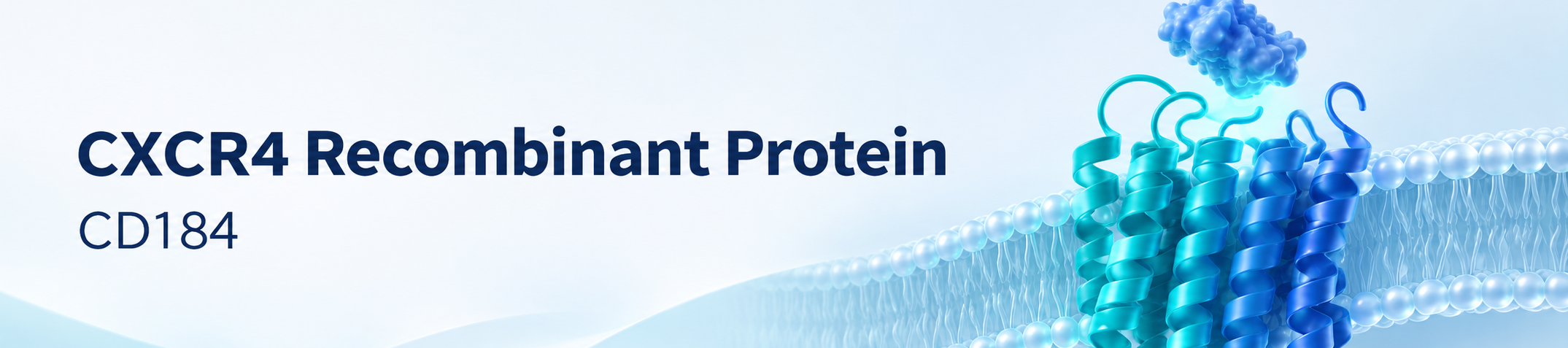
1. CXCR4/CD184 Molecular Structure and Expression
CXCR4 (C-X-C Motif Chemokine Receptor 4), also known as CD184, is a class A (rhodopsin-like) G protein-coupled receptor (GPCR) encoded by the CXCR4 gene. It primarily recognizes the chemokine CXCL12, also known as stromal cell-derived factor 1 (SDF-1), and regulates cell migration, tissue localization, and intracellular signaling.
CXCR4 is a seven-transmembrane receptor consisting of an extracellular N-terminus, seven transmembrane α-helices (TM1–TM7), three extracellular loops (ECL1–ECL3), three intracellular loops (ICL1–ICL3), and an intracellular C-terminal region. The extracellular N-terminus and loops contribute to ligand recognition, while the transmembrane helices form the receptor's ligand-binding pocket. Intracellular regions interact with heterotrimeric G proteins and other signaling regulators.
The extracellular N-terminus contains acidic amino acid residues involved in ligand recognition. Sulfation of specific tyrosine residues enhances CXCL12 binding, while disulfide bonds in the extracellular region help maintain the receptor conformation required for ligand recognition.
CXCR4 is widely expressed in hematopoietic stem cells, T cells, B cells, monocytes, and various tissue-resident cell populations. Its expression and signaling activity are associated with cellular differentiation, tissue distribution, and local microenvironmental cues.
2. CXCR4 Binding to CXCL12 (SDF-1)
The principal endogenous chemokine ligand for CXCR4 is CXCL12 (C-X-C Motif Chemokine Ligand 12), also known as SDF-1. CXCL12 is produced by bone marrow stromal cells, fibroblasts, endothelial cells, and other tissue-associated cells. Its interaction with CXCR4 regulates chemotaxis and cellular positioning within tissues.
CXCR4–CXCL12 recognition involves the receptor's extracellular N-terminus, extracellular loops, and transmembrane binding pocket. The classical two-site model describes two major interaction regions, referred to as chemokine recognition sites 1 and 2 (CRS1 and CRS2).
CRS1 primarily involves interactions between the CXCR4 N-terminus and the globular core of CXCL12, contributing to ligand recognition and binding stability. CRS2 involves insertion of the CXCL12 N-terminus into the CXCR4 transmembrane binding pocket, promoting conformational changes associated with receptor activation.
CXCL12 also interacts with glycosaminoglycans on cell surfaces and within the extracellular matrix. These interactions help establish localized chemokine gradients that guide the directional migration of CXCR4-expressing cells.
In addition to CXCR4, CXCL12 binds the atypical chemokine receptor ACKR3 (CXCR7), which contributes to chemokine uptake, distribution, and signaling regulation.
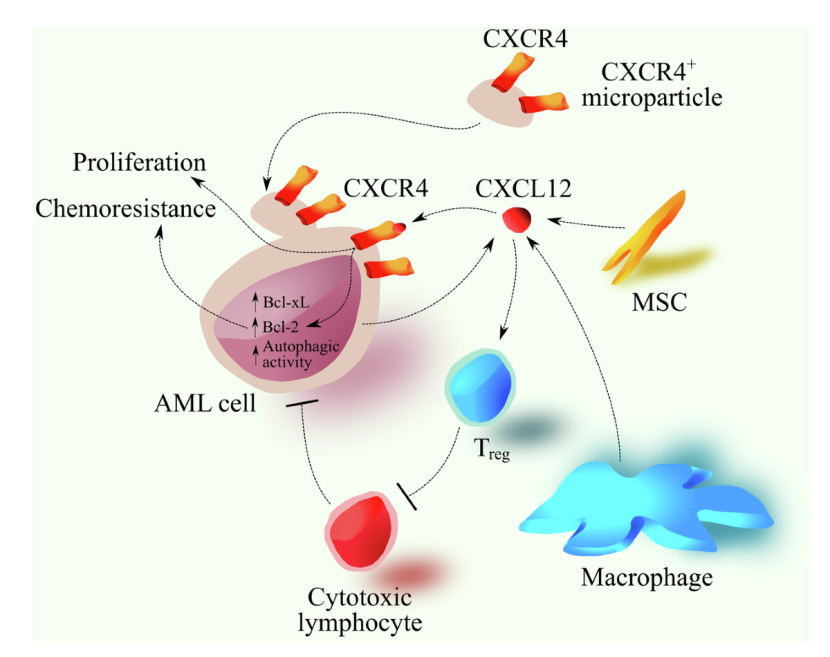
3. CXCR4-Mediated Signaling Pathways
CXCR4 primarily signals through heterotrimeric G proteins of the Gαi/o family. Following CXCL12 binding, receptor activation promotes GDP–GTP exchange on the Gαi subunit, initiating signaling through Gαi and Gβγ-dependent pathways.
Activated Gαi inhibits adenylyl cyclase activity, reducing intracellular cyclic adenosine monophosphate (cAMP) levels. Meanwhile, Gβγ subunits regulate downstream effectors, including phosphoinositide 3-kinase (PI3K) and phospholipase Cβ (PLCβ).
The PI3K–AKT pathway contributes to cell survival, migration, and the establishment of cell polarity. PLCβ-mediated hydrolysis of phosphatidylinositol 4,5-bisphosphate (PIP2) generates inositol 1,4,5-trisphosphate (IP3) and diacylglycerol (DAG), promoting intracellular Ca²⁺ mobilization and protein kinase C (PKC) activation. These signals regulate actin cytoskeleton remodeling and chemotactic movement.
CXCR4 activation can also engage mitogen-activated protein kinase (MAPK) pathways, including the RAS–RAF–MEK–ERK cascade, which influences cell proliferation, differentiation, and gene expression.
Following ligand stimulation, G protein-coupled receptor kinases (GRKs) phosphorylate serine and threonine residues within the CXCR4 C-terminal region, promoting β-arrestin recruitment. β-Arrestin participates in receptor desensitization and internalization, thereby regulating cell-surface receptor availability and signaling duration.
4. Biological Functions of the CXCR4–CXCL12 Signaling Axis
● Immune Cell Chemotaxis and Tissue Localization
CXCR4 regulates the directional migration of T cells, B cells, and other immune cell populations in response to CXCL12 gradients. Receptor activation influences actin cytoskeleton organization, integrin activation, and cell adhesion, enabling immune cells to migrate toward specific tissue microenvironments.
During B-cell development, CXCR4 contributes to the positioning and migration of developing B-cell populations within the bone marrow.
● Hematopoietic Stem Cell Homing and Bone Marrow Retention
The CXCR4–CXCL12 axis plays a central role in hematopoietic stem and progenitor cell homing, retention, and interactions with the bone marrow microenvironment.
CXCL12 produced by bone marrow stromal cells attracts CXCR4-expressing hematopoietic cells and helps maintain their localization within supportive niches. Disruption of CXCR4–CXCL12 interactions can promote the mobilization of hematopoietic stem and progenitor cells from the bone marrow into peripheral circulation.
● CXCR4 in Tumor-Associated Signaling
CXCR4 is expressed in subsets of breast cancer, lung cancer, and hematologic malignancies. CXCR4-positive tumor cells can respond to CXCL12 through signaling pathways that regulate migration, adhesion, and survival.
Within CXCL12-rich tissue environments, CXCR4-mediated chemotaxis may contribute to tumor cell localization and processes associated with metastasis. These effects depend on tumor type, cellular phenotype, and the surrounding microenvironment. CXCR4 expression alone does not establish metastatic potential.
● CXCR4 as an HIV-1 Coreceptor
CXCR4 also functions as a coreceptor for cellular entry by certain HIV-1 strains. In CXCR4-tropic (X4-tropic) HIV-1, the viral envelope glycoprotein gp120 first binds CD4, triggering conformational changes that enable subsequent recognition of CXCR4 and promote envelope-mediated membrane fusion.
HIV-1 strains differ in coreceptor usage. Some predominantly use CCR5, whereas others use CXCR4 or can recognize both coreceptors.
▋Related products
| Product Name | Catalog# | Molecule Weight | Expression System |
| NebuSelect™ Recombinant Human CD184/CXCR4 Protein | NBL-291041 | 17 kDa | E. coli |
| NebuSelect™ Recombinant Human CD184/CXCR4 Protein | NBL-291191 | 37 kDa | E. coli |
| NebuSelect™ Recombinant Human CXCR4, VLP | NBL-286674 | See COA | HEK 293 cells |
| NebuSelect™ Recombinant Human CXCR4, His-tag | NBL-253150 | See COA | E.coli |