
 +86-15801534258
 info@nebulabio.cn
+86-15801534258
info@nebulabio.cn
info@nebulabio.cn
+86-15801534258
info@nebulabio.cn
What are Selenoproteins: The Unique Identity of the 21st Amino Acid.
Selenoproteins are a special class of proteins that contain selenocysteine (Sec, one-letter code U) in their polypeptide chains. Sec is known as the twenty-first proteinogenic amino acid. Its structure is similar to that of cysteine, but the sulfur atom is replaced by selenium, giving it stronger nucleophilicity and distinctive redox properties. Therefore, Sec is often located at the catalytic or active sites of enzymes.
Non-Canonical Biosynthetic Codes: The 'Redefinition' of UGA
Sec is usually encoded by an in-frame UGA codon that normally functions as a termination signal and is recoded through a specialized mechanism involving a SECIS element, a specific transfer RNA, and related translation factors, allowing it to be incorporated into the nascent polypeptide chain.
Core Functions and Common Members
Selenoproteins are widely distributed in animals, selected protists, algae, bacteria, and archaea, and their number and composition vary considerably among species. They are mainly involved in peroxide removal, membrane lipid protection, maintenance of redox homeostasis, thyroid hormone metabolism, protein folding, selenium transport, energy metabolism, and regulation of cellular stress responses. Common types include glutathione peroxidases, thioredoxin reductases, iodothyronine deiodinases, members of the SELENO family, MSRB1, and SEPHS2. Because Sec may be replaced by cysteine in homologous proteins from different species, whether a protein is a natural selenoprotein should be determined by whether its actual amino acid sequence contains the letter U.
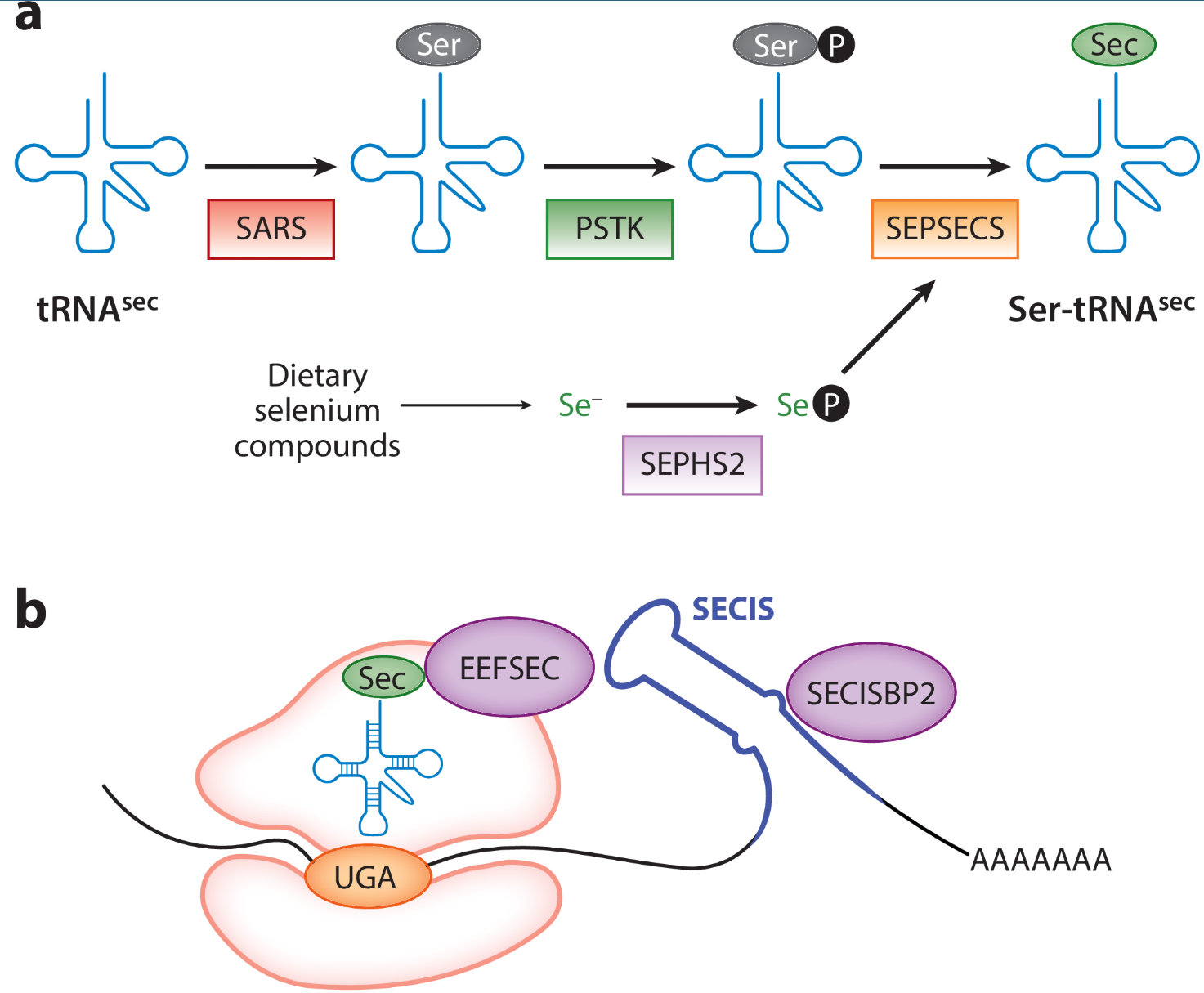
Ticó M, Mariotti M. The Metazoan Selenoproteome. Annu Rev Anim Biosci. 2026 Feb;14(1):107-135. doi: 10.1146/annurev-animal-030424-072943. Epub 2025 Nov 10. PMID: 41212935.