
 +86-15801534258
 info@nebulabio.cn
+86-15801534258
info@nebulabio.cn
info@nebulabio.cn
+86-15801534258
info@nebulabio.cn
Recombinant protein expression has become one of the foundational technologies in modern molecular biology, cell biology, immunology, and structural biology. By introducing a gene of interest into a suitable host cell, researchers can utilize the host's cellular machinery to synthesize recombinant proteins for a wide range of research applications, including protein characterization, antibody discovery, enzyme studies, cell signaling research, and protein-protein interaction analysis.
The success of recombinant protein production depends not only on the target gene itself but also on selecting an appropriate protein expression system. Different host cells possess distinct biological characteristics, including protein folding mechanisms, post-translational modification pathways, secretion capabilities, and intracellular processing machinery. As a result, no single expression platform is suitable for every protein.
Today, the most widely used recombinant protein expression systems include the E. coli expression system, yeast expression system, insect cell expression system, and mammalian cell expression system. Each platform offers unique advantages based on the structural complexity and biological properties of the target protein.
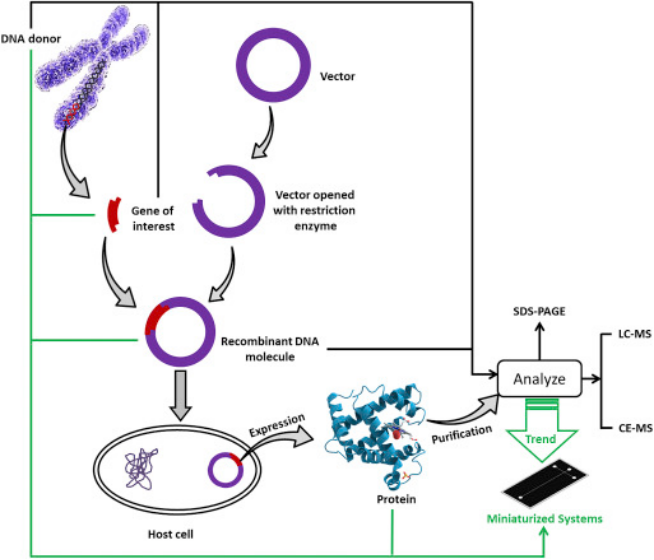
What Is a Recombinant Protein Expression System?
A recombinant protein expression system is a biological platform that enables host cells to produce proteins encoded by exogenous DNA. After a gene of interest is introduced into a compatible host, the cellular transcription and translation machinery synthesizes the corresponding recombinant protein. Depending on the host organism, the newly synthesized protein may subsequently undergo folding, disulfide bond formation, secretion, and various post-translational modifications (PTMs) before becoming a mature protein.
Protein expression systems are generally classified into two major categories:
· Prokaryotic expression systems
· Eukaryotic expression systems
Prokaryotic hosts provide rapid and efficient protein production but have limited protein processing capabilities. In contrast, eukaryotic hosts possess sophisticated intracellular organelles such as the endoplasmic reticulum and Golgi apparatus, enabling complex protein maturation and post-translational processing.
Because protein structure is closely associated with biological function, selecting an appropriate protein expression platform is a critical consideration for recombinant protein research.
E. coli Expression System
The E. coli expression system remains the most commonly used prokaryotic platform for recombinant protein expression. Owing to its rapid growth, simple culture requirements, well-characterized genetics, and high protein production efficiency, Escherichia coli has become a standard host for laboratory research.
Following introduction of the target gene, bacterial RNA polymerase transcribes messenger RNA, which is subsequently translated by ribosomes into the recombinant protein. Since E. coli lacks membrane-bound organelles such as the endoplasmic reticulum and Golgi apparatus, protein synthesis occurs directly within the cytoplasm.
Although bacterial expression offers high productivity, it generally cannot perform complex eukaryotic post-translational modifications, including glycosylation. Consequently, this system is most appropriate for proteins that do not require sophisticated intracellular processing, such as enzymes, bacterial proteins, certain antigens, and relatively simple recombinant proteins.
Yeast Expression System
The yeast expression system bridges the gap between prokaryotic and higher eukaryotic expression platforms. Common hosts include Saccharomyces cerevisiae and Pichia pastoris (Komagataella phaffii).
As unicellular eukaryotes, yeast cells possess intracellular organelles capable of protein folding, disulfide bond formation, and selected post-translational modifications. Compared with bacterial hosts, yeast can produce proteins with more native-like structural characteristics while maintaining relatively straightforward cultivation.
After translation, recombinant proteins enter the endoplasmic reticulum and Golgi apparatus, where they undergo maturation before secretion or intracellular localization. Although yeast performs glycosylation, its glycan structures differ from those produced by mammalian cells, making this an important consideration when studying proteins that require native mammalian glycosylation patterns.
Insect Cell Expression System
The insect cell expression system is widely based on the Baculovirus Expression Vector System (BEVS). Frequently used insect cell lines include Sf9, Sf21, and High Five cells.
In this platform, recombinant baculoviruses deliver the target gene into insect cells, where the host transcriptional and translational machinery synthesizes the desired protein. Compared with bacterial systems, insect cells provide more advanced protein processing capabilities, including proper protein folding, disulfide bond formation, oligomer assembly, and partial glycosylation.
These characteristics make insect cells particularly suitable for expressing structurally complex proteins such as viral antigens, membrane proteins, receptor proteins, multiprotein complexes, and virus-like particles (VLPs). Consequently, insect cell expression has become an important tool in structural biology and virology research.
Mammalian Cell Expression System
The mammalian cell expression system represents the most physiologically relevant platform for producing complex recombinant proteins. Because mammalian cells closely mimic native human cellular environments, they are capable of generating proteins with authentic folding, glycosylation, secretion, and other post-translational modifications.
Among mammalian hosts, HEK293 expression and CHO cell expression are the two most widely used platforms.
HEK293 cells, derived from human embryonic kidney tissue, are well known for their high transfection efficiency and robust transient protein expression, making them particularly suitable for exploratory research and rapid recombinant protein production.
CHO (Chinese Hamster Ovary) cells possess highly stable protein processing pathways and are extensively utilized for expressing structurally sophisticated recombinant proteins. Their ability to generate complex glycoproteins with native-like structural properties makes them an important platform for many recombinant protein studies.
For proteins that require native conformations—including antibodies, Fc fusion proteins, cytokines, growth factors, extracellular domains, receptors, and secreted proteins—mammalian expression systems generally provide the closest approximation to naturally occurring proteins.
Comparison of Major Protein Expression Systems
Each recombinant protein expression system exhibits distinct biological characteristics that influence protein quality and suitability for specific applications.
Expression System | Host Type | Post-Translational Modifications | Representative Protein Types |
E. coli Expression System | Prokaryotic | Minimal | Enzymes, bacterial proteins, simple recombinant proteins |
Yeast Expression System | Eukaryotic | Partial glycosylation | Secreted proteins, enzymes, selected eukaryotic proteins |
Insect Cell Expression System | Eukaryotic | Moderate | Viral proteins, membrane proteins, receptors, VLPs |
Mammalian Cell Expression System | Eukaryotic | Comprehensive | Antibodies, cytokines, Fc fusion proteins, complex glycoproteins |
Rather than representing a hierarchy of performance, these systems provide complementary capabilities. The optimal choice depends primarily on the structural and biochemical requirements of the target protein.
Choosing the Appropriate Protein Expression System
Selecting an appropriate recombinant protein expression system requires consideration of several protein-specific characteristics, including molecular complexity, intracellular localization, requirement for post-translational modifications, secretion behavior, and native quaternary structure.
Simple proteins without complex processing requirements are frequently compatible with bacterial expression systems. Proteins requiring partial eukaryotic processing may be suitable for yeast or insect cell expression, whereas structurally sophisticated glycoproteins generally benefit from mammalian cell expression.