
 +86-15801534258
 info@nebulabio.cn
+86-15801534258
info@nebulabio.cn
info@nebulabio.cn
+86-15801534258
info@nebulabio.cn
Recombinant protein technology has become an essential approach in modern life science research, enabling the production of proteins for biochemical studies, structural analysis, and molecular interaction investigations. During recombinant protein expression, fusion tags are commonly introduced to facilitate protein purification, detection, or characterization. Frequently used tags include His Tag, Fc Tag, GST Tag, MBP Tag, FLAG Tag, and Strep Tag.
A Tag-Free Recombinant Protein, also referred to as a Tag-Free Protein, is a recombinant protein produced without retaining any exogenous fusion tag sequence in the final product. Unlike His-tagged or Fc-fused proteins, Tag-Free proteins contain only the native amino acid sequence of the target protein, without additional peptide sequences derived from purification or detection tags.
The primary purpose of using Tag-Free proteins is to minimize potential interference caused by foreign amino acid sequences and provide a protein format that more closely represents the native molecular structure.
It is important to note that Tag-Free does not mean the protein is directly isolated from natural tissues or cells. Instead, it describes the final molecular composition of a recombinant protein product. The degree to which a recombinant protein resembles its native counterpart also depends on other biological factors, including expression host, post-translational modifications (PTMs), disulfide bond formation, glycosylation patterns, and protein folding efficiency.
Why Are Fusion Tags Used in Recombinant Protein Research?
Fusion tags are widely used in recombinant protein expression because they provide practical advantages during protein production and characterization.
For example, His Tag is one of the most commonly used protein tags due to its small size and ability to interact with nickel ions through metal affinity interactions. This property enables convenient detection and purification of His-tagged proteins.
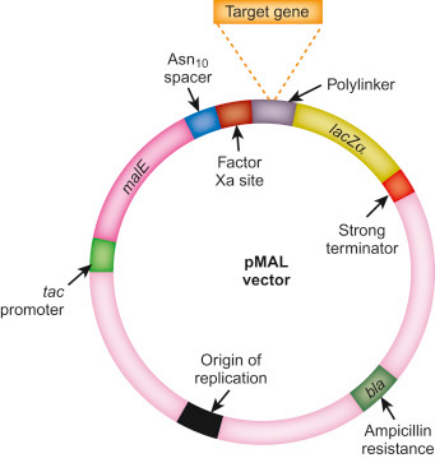
Larger fusion tags, such as GST, MBP, and Fc, provide additional functions. GST and MBP tags are frequently used to improve solubility of certain recombinant proteins, while Fc fusion can promote dimerization and increase molecular size, which may be beneficial for specific experimental applications.
Although protein tags provide valuable technical benefits, they are not biologically identical to the native protein sequence. Because fusion tags become part of the recombinant molecule, they may influence protein behavior depending on their size, location, flexibility, and relationship to functional regions.
For this reason, Tag-Free Protein formats are often considered when experimental goals require evaluation of native protein structure, molecular recognition, or biological activity.
How Can Fusion Tags Affect Recombinant Protein Properties?
The influence of fusion tags varies greatly depending on the target protein. For many recombinant proteins, a small tag such as His Tag has minimal impact. However, for proteins that rely heavily on precise three-dimensional structures or specific molecular interactions, even additional sequences located outside the functional domain may affect experimental outcomes.
Effects on Protein Conformation and Structural Stability
Protein function is determined by its correctly folded three-dimensional structure. The introduction of an additional peptide sequence at the N-terminus or C-terminus may alter local flexibility, domain orientation, or conformational dynamics.
This consideration is particularly relevant for extracellular proteins, cytokines, growth factors, and receptor extracellular domains (ECDs). These proteins often depend on highly specific structural arrangements maintained by disulfide bonds, secondary structures, and domain interactions.
For example, although a fusion tag may not directly participate in the functional site, its presence near a structural domain may influence the accessibility or movement of surrounding regions. Such effects may become important when studying receptor binding, antibody recognition, or structural characteristics.
Different tags can have different structural impacts. His Tag is relatively small and usually introduces limited steric effects, whereas larger tags such as GST, MBP, or Fc introduce substantially larger molecular surfaces that may influence protein behavior.
Effects on Protein-Protein Interactions
Many biological processes depend on highly specific molecular interactions, including receptor-ligand binding, antibody-antigen recognition, and protein complex formation.
In these applications, the spatial arrangement of interaction interfaces is critical. A fusion tag located close to a binding region may create steric hindrance, reducing accessibility of the interaction surface or altering binding kinetics.
For example, in receptor-ligand binding studies, a large fusion partner positioned near the ligand-binding interface may affect how efficiently the molecules approach each other. As a result, measured interaction parameters may differ from those obtained with an untagged protein.
This consideration is particularly important in quantitative binding assays, where researchers analyze kinetic parameters such as association rate (Ka), dissociation rate (Kd), and equilibrium dissociation constant (KD).
Using a Tag-Free Protein format can help reduce the possibility that external sequences influence the measured interaction properties.
Tag-Free Protein in SPR and BLI-Based Binding Analysis
Surface Plasmon Resonance (SPR) and Bio-Layer Interferometry (BLI) are widely used label-free technologies for measuring biomolecular interactions in real time. These platforms provide quantitative information about molecular binding behavior, including association kinetics, dissociation kinetics, and binding affinity.
In a typical SPR or BLI experiment, one interaction partner is immobilized on a sensor surface, while the binding partner is introduced as the analyte. Because the orientation and accessibility of the immobilized protein directly influence molecular interactions, the structural integrity of the target protein is an important consideration.
Fusion tags may affect binding measurements through several mechanisms. For example, when a His-Tagged Protein is immobilized through a Ni-NTA surface, the His tag provides a convenient anchoring point. However, the orientation of the immobilized molecule depends on the position of the tag relative to the functional domain.
If the tag is located close to the receptor-binding region or antibody recognition site, immobilization may partially restrict accessibility of the interaction interface. This limitation can potentially influence the observed binding response and kinetic parameters.
A Tag-Free Protein eliminates the presence of additional peptide sequences that may interfere with molecular recognition. Therefore, Tag-Free formats are often considered for experiments where accurate characterization of native protein interactions is required, including receptor-ligand binding studies, antibody binding analysis, and protein complex characterization.
However, Tag-Free Protein is not always required for SPR or BLI experiments. Many His-tagged proteins generate reliable kinetic data when the tag position, immobilization strategy, and binding interface are appropriately evaluated. The selection of protein format should always be based on the structural characteristics of the target protein and the experimental objective.
Tag-Free Protein vs His-Tagged Protein: How to Choose?
Both Tag-Free Recombinant Proteins and His-Tagged Proteins are widely used in molecular biology research. The appropriate choice depends primarily on the purpose of the experiment rather than the inherent superiority of one format over another.
His-Tagged Protein
His-tagged proteins remain one of the most commonly used recombinant protein formats because of their experimental convenience.
The small size of His Tag generally minimizes interference with protein structure, while providing a simple approach for protein detection, purification, and immobilization. His-tagged proteins are frequently used in:
● Protein expression verification
● Western blot analysis
● ELISA assay development
● Routine biochemical characterization
● Protein screening applications
For many proteins, His Tag does not significantly alter protein behavior, making it an effective and practical choice for general research applications.
Tag-Free Recombinant Protein
Tag-Free Protein is typically selected when researchers need to evaluate protein properties under conditions closer to the native molecular state.
Applications that may benefit from Tag-Free formats include:
● Protein-protein interaction studies
● Receptor-ligand binding assays
● Antibody epitope characterization
● Structural biology research
● Functional analysis of conformational proteins
For example, when studying an extracellular receptor domain, the absence of a fusion tag can reduce concerns regarding artificial steric effects or altered molecular orientation. Similarly, in antibody binding studies, Tag-Free proteins can provide a more representative target antigen without potential interference from an external sequence.
Therefore, the choice between Tag-Free and His-Tagged proteins should be determined by the experimental design, assay requirements, and biological characteristics of the target protein.
Protein Types Commonly Studied as Tag-Free Recombinant Proteins
Although Tag-Free Protein formats can be applied to many recombinant proteins, they are particularly common in studies involving proteins that require precise structural integrity or molecular recognition.
● Cytokines and Chemokines
Cytokines and chemokines often interact with specific cell surface receptors through highly conserved structural regions. Because receptor recognition depends on accurate three-dimensional organization, maintaining native protein conformation is critical.
Tag-Free cytokines are frequently used in receptor binding studies, functional assays, and molecular interaction analysis where external sequences may influence ligand accessibility.
● Growth Factors
Growth factors typically contain conserved disulfide bonds and complex structural features required for receptor activation. Changes in molecular conformation can influence receptor recognition and downstream signaling properties.
For these proteins, Tag-Free formats can provide a closer representation of the native molecular architecture used in biological interaction studies.
● Receptor Extracellular Domains (ECDs)
Recombinant receptor extracellular domains are widely used for studying receptor-ligand interactions, antibody binding, and molecular recognition mechanisms.
Because receptor ECDs often contain multiple structural domains responsible for ligand recognition, additional fusion sequences may affect domain orientation or accessibility. Tag-Free receptor proteins are therefore commonly considered when precise interaction analysis is required.
● Cell Adhesion Molecules and Immune-Related Proteins
Cell adhesion molecules and immune-related proteins frequently rely on highly specific intermolecular interactions. Accurate structural presentation of binding regions is essential for understanding molecular recognition.
Tag-Free proteins are often used in studies involving protein complex formation, binding kinetics, and epitope characterization.
● Considerations Beyond Protein Tags
Although Tag-Free Protein removes potential interference from fusion sequences, other biological factors continue to influence recombinant protein properties.
Protein folding, post-translational modifications, glycosylation patterns, disulfide bond formation, and expression host characteristics all contribute to the final structural and functional properties of recombinant proteins.
For example, a Tag-Free protein expressed in a system that does not support appropriate glycosylation may still differ from its native counterpart. Likewise, proteins requiring complex folding mechanisms may display different properties depending on the expression environment.
Therefore, protein format selection should consider the complete biological context rather than focusing solely on the presence or absence of a fusion tag.
Conclusion
Tag-Free Recombinant Protein represents an important protein format in modern recombinant protein research. By eliminating external fusion sequences, Tag-Free Protein provides a molecular format that more closely resembles the native target protein sequence and reduces potential interference from protein tags.
Compared with His-Tagged Proteins, Tag-Free proteins are particularly valuable in applications requiring accurate evaluation of protein structure, molecular recognition, and interaction characteristics, including SPR, BLI, receptor-ligand binding studies, and structural biology research.
Nevertheless, fusion tags remain essential tools in recombinant protein technology, offering significant advantages for protein purification, detection, and experimental flexibility. The selection between Tag-Free and tagged recombinant proteins should be guided by the biological properties of the target protein and the specific requirements of the research application.
Understanding how protein tags influence molecular behavior enables researchers to design more reliable experiments and select the most appropriate recombinant protein format for their scientific objectives.