
 +86-15801534258
 info@nebulabio.cn
+86-15801534258
info@nebulabio.cn
info@nebulabio.cn
+86-15801534258
info@nebulabio.cn

Horseradish peroxidase (HRP) is a naturally occurring heme-containing enzyme isolated from the roots of horseradish (Armoracia rusticana). Owing to its high catalytic activity, excellent stability, and compatibility with a wide range of biomolecule conjugation strategies, HRP has become one of the most widely used reporter enzymes in molecular biology, immunology, and biochemistry.
Today, HRP serves as the standard enzymatic label for numerous research applications, including enzyme-linked immunosorbent assay (ELISA), Western blotting, immunohistochemistry (IHC), immunoblotting, protein analysis, nucleic acid detection, and chemiluminescent assays. Its ability to amplify detection signals through substrate oxidation has made it an indispensable component of modern immunodetection systems.
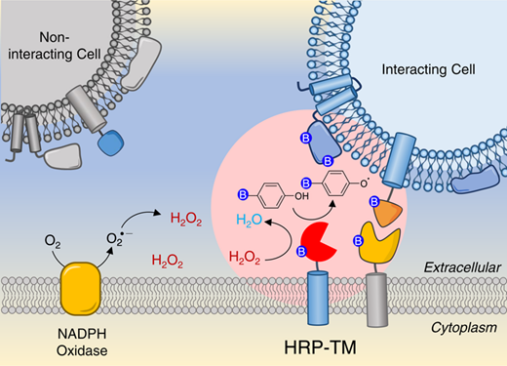
Structural Characteristics of Horseradish Peroxidase
HRP belongs to the Class III plant peroxidase family, a group of secreted glycoproteins that catalyze hydrogen peroxide-dependent oxidation reactions.
Native HRP is composed of approximately 308 amino acids with a molecular weight of approximately 44 kDa. The enzyme is heavily glycosylated, with carbohydrate chains accounting for roughly 18–20% of its total molecular mass. These glycans contribute significantly to its structural stability and resistance to environmental stress.
Several structural features define HRP function:
· A single heme b prosthetic group located within the catalytic center
· Multiple disulfide bonds that stabilize the tertiary structure
· Extensive N-linked glycosylation
· A highly conserved substrate-binding pocket surrounding the heme center
The three-dimensional structure of HRP consists predominantly of α-helices, which form a compact globular protein architecture. The heme prosthetic group is deeply embedded within a hydrophobic cavity, where conserved amino acid residues precisely position the iron atom for efficient electron transfer during catalysis.
Catalytic Mechanism of HRP
HRP functions as an oxidoreductase that utilizes hydrogen peroxide (H₂O₂) as an electron acceptor.
The catalytic cycle begins when hydrogen peroxide reacts with the resting ferric enzyme, generating a highly reactive intermediate known as Compound I. Compound I subsequently oxidizes electron-donating substrates through two sequential one-electron transfer reactions, passing through Compound II before returning to its resting state.
Overall, the reaction can be summarized as:
H₂O₂ + Reduced Substrate → Oxidized Substrate + H₂O
Because the enzyme is regenerated after each catalytic cycle, a single HRP molecule can convert a large number of substrate molecules, providing substantial signal amplification in analytical assays.
HRP efficiently catalyzes a variety of chromogenic and chemiluminescent substrates, including:
· TMB (3,3',5,5'-Tetramethylbenzidine)
· OPD (o-Phenylenediamine)
· ABTS
· DAB (3,3'-Diaminobenzidine)
· Luminol and enhanced chemiluminescent (ECL) substrates
Different substrates generate distinct colorimetric or luminescent outputs, enabling HRP to support multiple analytical platforms.
Advantages of HRP as a Reporter Enzyme
HRP has remained the preferred reporter enzyme in life science research for decades because of several favorable biochemical properties.
One of its greatest advantages is high catalytic turnover, allowing efficient conversion of substrates into detectable products and providing significant signal amplification.
HRP is also compatible with numerous detection chemistries, including colorimetric, fluorometric, and chemiluminescent assays. This versatility enables researchers to select detection methods according to experimental objectives and instrumentation.
Another important characteristic is its relatively small molecular size. Following conjugation with antibodies, streptavidin, or other affinity molecules, HRP generally causes minimal steric interference, preserving target recognition while maintaining enzymatic activity.
In addition, HRP demonstrates excellent stability under appropriate storage and assay conditions, contributing to reproducible experimental performance across multiple applications.
Major Research Applications of HRP
In sandwich, indirect, and competitive ELISA formats, HRP is typically conjugated to secondary antibodies or streptavidin. Following antigen recognition, chromogenic substrates such as TMB are added, allowing HRP to catalyze color development that can be quantified by measuring absorbance with a microplate reader.
Because of its sensitivity and robust performance, HRP-based detection has become the standard approach in commercial ELISA research reagents.
Secondary antibodies conjugated with HRP bind specifically to target proteins immobilized on membranes. Upon addition of chemiluminescent substrates, HRP catalyzes luminol oxidation, generating light that is captured using CCD cameras or digital imaging systems.
This detection strategy offers high sensitivity, broad dynamic range, and excellent compatibility with quantitative protein analysis.
Following antibody binding, the addition of DAB substrate results in the formation of an insoluble brown precipitate at antigen localization sites. This permanent chromogenic signal enables microscopic visualization of protein distribution and cellular localization within tissue sections.
HRP-DAB staining remains one of the most commonly employed detection methods in research immunohistochemistry.
Beyond ELISA and Western blotting, HRP is extensively used in various immunological and molecular biology techniques, including:
· Dot blot assays
· Southern blotting
· Northern blotting
· Protein microarrays
· Nucleic acid hybridization assays
· Streptavidin-biotin detection systems
Its strong signal amplification significantly improves analytical sensitivity while maintaining high reproducibility.
Factors Affecting HRP Activity
The catalytic performance of HRP depends on several experimental parameters.
Hydrogen peroxide concentration is one of the most critical variables. Appropriate peroxide levels sustain efficient catalytic cycling, whereas excessive concentrations may lead to enzyme inactivation.
pH also influences enzymatic activity. Most HRP-based substrate systems perform optimally under mildly acidic to neutral conditions, although optimal pH values vary depending on the substrate chemistry.
Temperature affects both catalytic efficiency and structural stability. Moderate temperatures generally preserve enzymatic activity, while prolonged exposure to elevated temperatures can induce conformational changes and reduce activity.
Additionally, heavy metal ions, strong oxidizing agents, organic solvents, and certain detergents may interfere with enzyme function and should be carefully controlled during experimental design.
Comparison with Other Reporter Enzymes
Several reporter enzymes are commonly used in biological research, including alkaline phosphatase (AP), β-galactosidase, and various luciferases.
Compared with these alternatives, HRP offers several distinct advantages, including rapid catalytic kinetics, broad substrate compatibility, mature conjugation technologies, and highly efficient signal amplification.
While each reporter enzyme has specific strengths depending on the experimental platform, HRP remains the most frequently employed enzyme label for immunological assays, particularly in ELISA, Western blotting, and immunohistochemistry.
| For more information, please contact us at info@nebulabio.cn or +86-15801534258. |