
 +86-15801534258
 info@nebulabio.cn
+86-15801534258
info@nebulabio.cn
info@nebulabio.cn
+86-15801534258
info@nebulabio.cn

From the core perspectives of biophysics and structural biology, this article systematically analyzes the stability and structural behavior of membrane proteins under non-native conditions. Focusing on the amphipathic molecular architecture of membrane proteins, it explains the physical basis by which lipid bilayers stabilize protein conformation, elucidates the role of critical micelle concentration (CMC) in detergent micelle formation and membrane protein solubilization, examines the conceptual framework of nanodiscs and styrene–maleic acid (SMA) copolymers for mimicking native membrane environments, and introduces the biophysical principles underlying lipidic cubic phase (LCP) crystallization in membrane protein structure determination. Together, these concepts provide a theoretical framework for understanding membrane protein structural studies.
In structural biology, membrane proteins are widely regarded as one of the most challenging classes of macromolecules to study. This group includes G protein–coupled receptors (GPCRs), ion channels, and a broad range of transmembrane transporters. Their defining feature is the requirement to function simultaneously within the hydrophobic interior of lipid bilayers and the aqueous environments on either side of the membrane. From a biophysical standpoint, the primary difficulty in membrane protein research does not arise from functional complexity, but from the strong dependence of native conformation on the membrane environment. Once removed from the lipid bilayer, hydrophobic transmembrane surfaces become exposed to water, resulting in substantial free energy penalties that rapidly drive aggregation or denaturation.
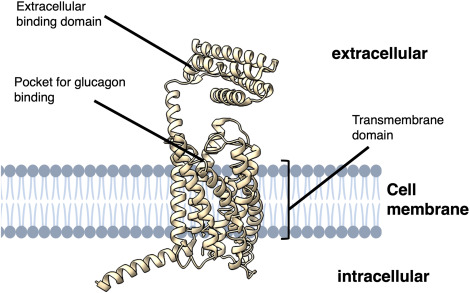
Topological Organization and Amphipathic Properties of Membrane Proteins
The structural foundation of membrane proteins lies in their transmembrane domains (TMDs). In most receptors and ion channels, TMDs are composed of multiple α-helices, whereas β-barrel architectures dominate in certain porins and transport proteins. These domains are enriched in hydrophobic amino acid residues that interact favorably with the acyl chains of lipid bilayers through van der Waals forces.
In contrast, extracellular and intracellular loops contain predominantly polar or charged residues and are exposed to aqueous environments. This pronounced spatial segregation places membrane proteins in a minimum free energy state only when embedded within lipid bilayers. Consequently, under non-native conditions, destabilization occurs rapidly unless the hydrophobic transmembrane regions are provided with a physicochemically equivalent environment. For this reason, the central challenge of membrane protein research is not extraction per se, but recreating an energetically compatible amphipathic environment after membrane removal.
Detergent Micelles and Mechanisms of Membrane Protein Solubilization
Detergents represent the most fundamental tools for membrane protein solubilization. As amphipathic molecules, detergents self-assemble into micelles when their concentration exceeds the critical micelle concentration (CMC). During solubilization, detergent monomers initially partition into the lipid bilayer, progressively disrupting lipid–lipid and lipid–protein interactions. As the membrane disintegrates, detergent molecules reorganize to surround the hydrophobic transmembrane regions, forming protein–detergent complexes.
The physicochemical properties of detergents—such as hydrophobic tail length, headgroup chemistry, micelle size, and CMC—directly influence protein stability. Strong detergents efficiently disrupt membranes but often compromise intramolecular hydrophobic interactions, leading to unfolding. Milder detergents form larger micelles with lower CMC values and are more likely to preserve tertiary structure, sometimes retaining tightly bound annular lipids that contribute to conformational stability.
Mimicking Native Membrane Environments: Nanodiscs and SMA Systems
Although detergent micelles enable solubilization, they represent a highly simplified membrane substitute and fail to reproduce key bilayer properties such as lateral pressure and curvature. To address this limitation, nanodisc technology has been developed as a more physiologically relevant model system.
Nanodiscs employ membrane scaffold proteins to encircle a defined patch of phospholipid bilayer, producing soluble discoidal particles into which membrane proteins can be embedded in near-native orientations. Compared with detergent systems, nanodiscs allow precise control over lipid composition, enabling systematic investigation of lipid-dependent conformational stability and regulation.
More recently, styrene–maleic acid (SMA) copolymers have enabled detergent-free solubilization strategies. SMA can directly extract nanoscale patches of membrane containing both the target protein and its surrounding native lipids, forming so-called SMALPs. This approach preserves the local lipid environment to a maximal extent, providing an experimental framework that closely approximates physiological conditions and is particularly valuable for studying protein–lipid interactions.
Lipidic Cubic Phase (LCP) and Principles of Membrane Protein Crystallization
In X-ray crystallography of membrane proteins, lipidic cubic phase (LCP) technology has played a transformative role. LCP is a mesophase characterized by a three-dimensionally continuous lipid bilayer forming a periodic minimal surface, with interconnected aqueous channels.
Membrane proteins embedded in LCP can diffuse laterally within the curved bilayer while remaining in a membrane-like environment. Upon reaching supersaturation, proteins nucleate and form crystals through interactions mediated by extramembranous regions or through ordered stacking of protein–lipid layers. This crystallization mode simultaneously restricts conformational flexibility and maintains native-like constraints, substantially increasing the likelihood of obtaining high-resolution diffraction data.
Conformational Stabilization and Ligand Locking Effects
Membrane proteins, particularly GPCRs, function as dynamic molecular machines that interconvert between multiple conformational states. For structural analysis, stabilizing a single conformational state is essential. High-affinity ligands or conformational stabilizers reduce conformational entropy by biasing the energy landscape toward a specific low-energy state.
Ligand binding effectively “locks” the protein into a defined conformation, improving homogeneity across the population. In cryo-electron microscopy, additional stabilizing elements—such as antibody fragments or signaling partners—are frequently used to further rigidify intracellular domains and enable visualization of complete signaling assemblies.
Conclusion
Overall, membrane protein structural research represents a systematic application of biophysical principles. From the hydrophobic driving forces governing detergent micelle formation to the phase behavior of lipidic cubic systems, each methodological framework seeks to reconstruct the native energetic landscape of membrane proteins under non-native conditions. A deep understanding of these physical mechanisms is fundamental to achieving stable membrane protein preparations and reliable structural characterization.
| For more information, please contact us at info@nebulabio.cn or +86-15801534258. |