
 +86-15801534258
 info@nebulabio.cn
+86-15801534258
info@nebulabio.cn
info@nebulabio.cn
+86-15801534258
info@nebulabio.cn
Description: What defines a stable cell line in modern cell-based research? This article presents an engineering-oriented overview of stable cell line services, focusing on their fundamental distinction from transient models, the shared engineering logic underlying different types of stable cell lines, the role of commonly used host backgrounds such as HEK293 and CHO, and the use of validation tools including qPCR, Western blot, flow cytometry, and ELISA to confirm phenotypic consistency across passages. The discussion emphasizes stability as a design principle rather than a single technical approach.
▌ Core Concept of Stable Cell Lines
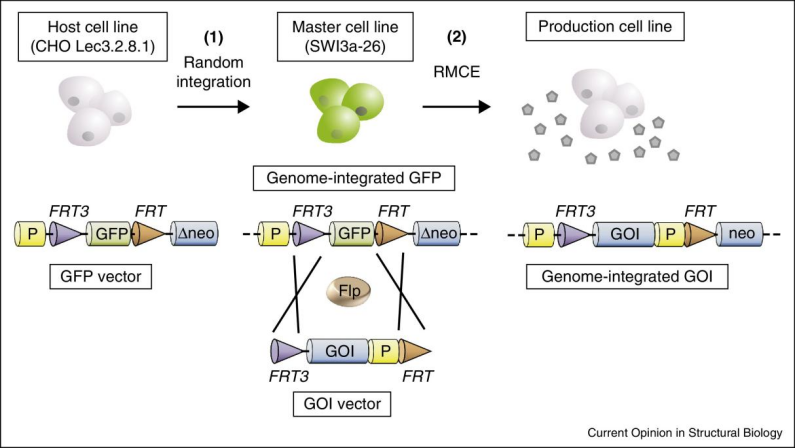
A stable cell line is an engineered mammalian cell model in which a defined genetic state is maintained as a heritable property over extended culture periods. Unlike transient transfection or short-lived perturbation systems, stable cell lines are designed to preserve the same genetic modification across multiple passages, enabling consistent experimental output over time.
In practice, stable cell lines are not defined by maximal expression levels or by permanence as an end goal. Instead, they represent an engineering choice aimed at reducing variability introduced by the experimental system itself. When studies involve repeated stimulation, longitudinal observation, or comparison across experimental batches, transient systems often introduce fluctuations that complicate interpretation. Stable cell lines are therefore adopted to support experimental designs that require temporal consistency.
▌Fundamental Differences Between Stable and Transient Models
Fundamental DifferenceTransient models rely on the temporary presence of exogenous DNA or RNA within cells. Their outputs are strongly influenced by delivery efficiency, intracellular processing, cell cycle state, and time-dependent decay. While such models are useful for rapid exploratory experiments, their inherent variability limits their suitability for studies requiring strict reproducibility.
Stable cell lines, by contrast, convert a genetic modification into a persistent cellular attribute. Because the engineered state is retained during cell division, experimental variability is shifted away from the expression system and toward the biological conditions under investigation. This distinction explains why stable models are more appropriate for assay development, screening workflows, and experiments spanning multiple passages or experimental cycles.s Between Stable and Transient Models
▌Shared Engineering Logic Across Different Types of Stable Cell Lines
Although stable expression, reporter, knockdown, knock-in, and knockout cell lines differ in their technical implementation, they are unified by a common set of engineering constraints. From this perspective, stable cell lines are not categorized primarily by modification type, but by whether they satisfy stability-driven design requirements.
First, all stable cell line types must ensure long-term maintenance of a defined genetic state within a proliferating cell population. Whether the modification involves integration of an expression cassette, sustained RNA interference, or CRISPR-mediated genome editing, the engineered state must resist dilution, silencing, or selective loss during extended culture. Second, stable cell lines must exhibit reproducible phenotypic output across a defined passage window. The nature of this output may vary—expression level, reporter responsiveness, partial suppression, or complete loss-of-function—but in all cases, consistency over time is a central requirement. The engineering objective is not simply to generate a detectable signal, but to ensure that the signal can be reliably reproduced. Third, stable cell lines are typically designed for experimental reuse and transferability. They are expected to perform consistently across experimental batches, operators, and, in some cases, laboratory environments. As a result, their behavior cannot depend strongly on the conditions of the initial modification event, but must be describable and reproducible in standardized terms.
Finally, all stable cell line workflows involve balancing population heterogeneity against engineering control. Polyclonal stable pools achieve functional stability through statistical averaging, whereas monoclonal lines minimize variability by fixing genetic identity. The choice between these formats reflects experimental stringency and design priorities rather than a qualitative hierarchy.
▌ Host Cell Context: HEK293 and CHO
Host cell background plays a critical role in how stable genetic modifications are expressed and interpreted. HEK293 cells are widely used for stable cell line development due to their adaptability to genetic manipulation and their responsiveness in signaling and mechanistic studies. These characteristics make them suitable for reporter systems and pathway-focused models.
CHO cells are valued for their long-term culture stability and consistent behavior across passages. In stable cell line workflows, CHO is often selected when extended observation or strict control of phenotypic drift is required. Importantly, host selection is context-dependent; there is no universally optimal host cell line, only backgrounds that are more appropriate for specific experimental goals.
▌ Validation of Stability and Model Confirmation
Validation of stable cell lines is not a one-time confirmation step, but an ongoing process to ensure consistency over time. qPCR is commonly used to assess transcript-level stability, while Western blot and flow cytometry are applied to evaluate protein expression and population-level distribution.
For models involving secreted products or extracellular readouts, ELISA provides quantitative confirmation of consistent output. Collectively, these validation approaches are used to determine whether a stable cell line maintains its defined behavior within the time scale required by the experimental design, rather than simply confirming that a modification occurred.
▌ Conclusion
Stable cell lines represent an engineering framework centered on long-term consistency and reproducibility in cell-based research. By embedding genetic modifications into the cellular background, stable models reduce system-level variability and allow experimental focus to shift toward biological questions. Regardless of whether the modification involves expression, reporting, suppression, insertion, or deletion, stable cell lines operate under shared engineering principles that support reliable, repeatable experimental outcomes.